reasearch paper banner image

CUSTOMER SPEAK

Building Resilient Cities with GIS: Delhi Development Authority

Geographic Information Systems (GIS) play a vital role in modern city planning by providing powerful tools to collect, analyze, and visualize spatial data. Through GIS, planners can map and study various aspects of urban areas such as land use, transportation networks, population density, and environmental features. This spatial analysis helps in making informed decisions about where to build new infrastructure, how to manage resources efficiently, and how to plan for sustainable urban growth. 

GIS also supports disaster management by identifying flood-prone or earthquake-sensitive zones, allowing for better risk assessment and mitigation strategies. Moreover, it enables planners to simulate different development scenarios, evaluate their impacts, and communicate plans effectively through visual maps and models. 

Through an interaction with Mr. Durganand Minz, Dy. Director/ GIS In-Charge, Delhi Development Authority (DDA), we explore how GIS enhances the accuracy, efficiency, and transparency of city planning, leading to smarter, more sustainable, and well-organized urban development.

How important is it to use technology in city planning?

Earlier, we used to work with paper maps, but now, with the help of technologies like ArcGIS, a lot of things can be done in city planning. Earlier, the master plans were drafted manually, but we are now using software. When you have to plan a city, you have to think about so many aspects, like population, land cover, transportation, housing, public spaces, etc. While planning a city, you have to forecast how your city will be in the coming 25 years. Technology can help us forecast things in the right way and plan accordingly.

Nowadays, the Government of India has mandated the use of spatial analysis in the development of city plans. In most development authorities, municipal corporations, and urban organizations, the role of planners has been highly effective. If we do not educate our planners in digital spatial planning tools like ArcGIS Enterprise or various modules of ArcGIS, we will not be able to effectively deliver the city or any locality.

Please tell us about your experience working with ArcGIS.

When I joined DDA in 2007, I took on the challenge of handling the city development aspect using ArcGIS. Moving on from ArcGIS Desktop to Indo ArcGIS, we are now using ArcGIS Enterprise for the whole organization. Using ArcGIS, we believe that we will be able to deliver more positive outcomes in the future.

How can the use of AI aid in making city planning, including infrastructure development, better?

AI plays a major role in making decisions from the right perspectives. It offers numerous tools that can be utilized for city planning. AI can predict where and when floods are likely to happen. This helps city planners take action early, such as improving drainage systems or avoiding construction in high-risk areas. On the land use side, AI can look at population trends, transportation networks, and environmental factors to suggest the best ways to use the available space. It can help determine where to build housing, parks, or roads while ensuring the city grows sustainably. AI gives planners powerful insights so cities can be safer, more efficient, and better prepared for future challenges.

The integration of GIS and AI transforms city planning and drives sustainable urban development. By combining GIS’s spatial data analysis capabilities with AI’s predictive and decision-making power, planners can better understand complex urban systems and make more informed, data driven choices. Together, GIS and AI enable cities to plan more intelligently, minimize environmental impact, and create resilient, sustainable communities that balance development with ecological preservation.


To download the PDF version of this article, click the button below.

Read More Articles

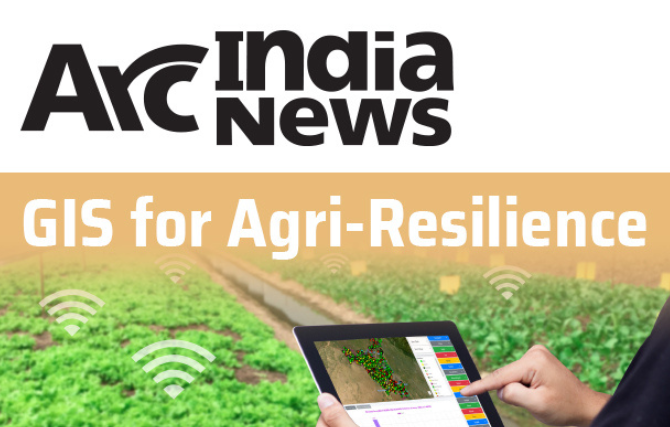
  • GIS for Agri-Resilience

    GIS for Agri-Resilience

    India is one of the major players in the agriculture sector worldwide, and it is the primary source of livelihood for ~45% of the country’s population. The sector plays a major role in supporting livelihoods and ensuring food security for millions.

  • HARSAC Harvests Success: Groundbreaking  Agri Reforms Mapped with ArcGIS

    HARSAC Harvests Success: Groundbreaking Agri Reforms Mapped with ArcGIS

    Haryana Space Applications Centre (HARSAC) has developed and deployed a Geospatial Technology-based Crop Management Solution to address challenges in agricultural management.

  • GIS in education

    Technology-enabled Agriculture Education: UAS, Raichur

    The mission of the University of Agricultural Sciences (UAS), Raichur is to generate quality human resources in the area of agriculture and allied disciplines, generate cutting-edge competitive technologies.

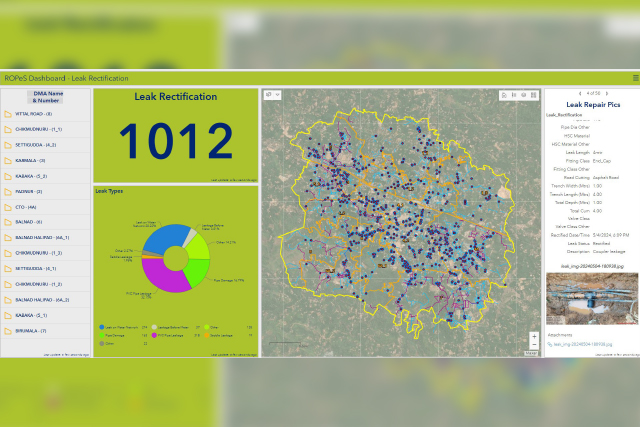
  • Enabling Suez to Achieve Optimum Efficiency in Water Projects

    Enabling Suez to Achieve Optimum Efficiency in Water Projects

    Suez Group has been active in the Indian water and wastewater market since 1978 and established an Indian subsidiary in 1986. Suez uses Esri products to enable comprehensive study and planning through GIS mapping, field surveys, and door-to-door surveys.

Previous
Next