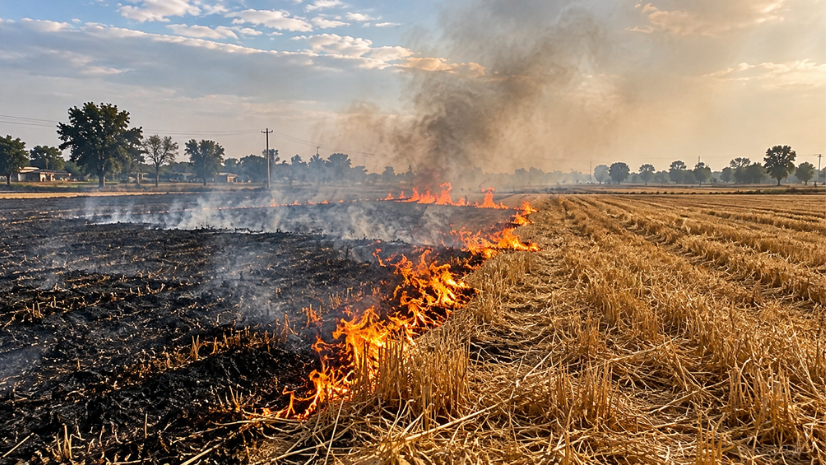
Every summer, India doesn’t just get hot. It gets dangerous.
Heatwaves now arrive earlier, last longer, and hit harder than they did three decades ago. For millions of people living in Delhi, Chennai, and Ahmedabad, extreme heat is no longer a seasonal inconvenience. It is a public health emergency.
The good news? Data-driven tools are changing how India prepares and responds. At the center of this shift is GIS-based heatwave mapping, which turns raw temperature data into decisions that protect lives.
India’s Summers Are Getting Hotter, and the Numbers Make It Clear
India’s heat problem is not just about rising temperatures. It is about how fast those temperatures are rising.
Between 1993 and 2024, India recorded a 15-fold increase in extreme heatwave days during the summer months of March to September. The last decade alone saw a 19-fold spike in such events. That is not a gradual trend. It is an acceleration.
Cities are feeling it first. Delhi logged 40 consecutive days above 40°C in 2024. Temperatures crossed 50°C in parts of Rajasthan. India recorded 41,789 suspected heatstroke cases and 143 heat-related deaths in a single season, and those are only the officially reported figures by the National Disaster Management Authority (NDMA).
Coastal districts face a different kind of problem. Extended summer-like conditions are now bleeding into monsoon months, with around 69% of coastal districts already affected by heat stress. That figure is projected to reach 79% by 2040.
The heat is here. The question is whether India’s cities are equipped to map it, predict it, and respond to it in time.
Key Insights from the IPE Global and Esri India Study on Heatwaves
In 2024, Esri India partnered with IPE Global to publish a landmark climate study titled “Managing Monsoons in a Warming Climate.” It provided India’s first district-level hazard mapping of combined heat and rainfall extremes.
The findings were stark:
- Major cities at double the risk: Mumbai, Delhi, Chennai, Hyderabad, Surat, Patna, Thane, and Bhubaneswar are all projected to see a two-fold increase in heatwave days by 2030.
- Eight out of ten Indians will be highly exposed to extreme climate events by 2036.
- 72% of Tier-I and Tier-II cities face heightened risks of heat stress and extreme rainfall at the same time.
- The top five heatwave hotspot states, which are Uttar Pradesh, Madhya Pradesh, Rajasthan, Gujarat, and Tripura, consistently show multi-decade patterns of extreme heat.
Agendra Kumar, Managing Director of Esri India, summed it up clearly: “GIS technology offers the ability to visualise and respond to these risks in real-time, whether in city planning, agriculture, or disaster response.”
This study used dynamic ensemble climate modelling, spatial analytics, and district-level GIS mapping to produce actionable intelligence for policymakers. It laid the blueprint for what science-backed heat management can look like in India.
The Growing Impact of Heatwaves in India
Heat does not affect just one system. It cascades across public health, energy, agriculture, and urban infrastructure at the same time.
Urban Heat Island Effect
India’s rapidly expanding cities trap and amplify heat. Dense construction, concrete surfaces, and shrinking green cover all contribute to the urban heat island effect, where city centers register temperatures several degrees higher than surrounding areas. Cities like Delhi, Chennai, and Ahmedabad consistently show dangerous heat island signatures during peak summer.
Public Health Risks
Heatstroke, respiratory distress, and cardiovascular failure are among the most common health consequences. Vulnerable groups, including the elderly, outdoor workers, and the urban poor, face the greatest exposure. India’s healthcare systems, especially in smaller cities, are frequently overwhelmed during peak heat events.
Energy Stress
When temperatures surge, so does electricity demand. Peak power demand crossed 250 GW in 2024, largely driven by increased air conditioning use. Grid stress during heatwaves causes power outages, which removes the one tool most people use to manage extreme heat.
Agriculture Stress
Rising temperatures during critical crop growth periods affect wheat, rice, and pulses. Combined with erratic rainfall, heat stress is becoming one of the most significant threats to India’s food security.
Why Heatwaves in India Are Becoming More Intense
Understanding the drivers helps explain why GIS-based heatwave monitoring needs to be built for scale and speed. Here are the key reasons behind intensifying heat events:
- Rising global temperatures: India sits in a region that is warming faster than the global average.
- Urbanization and green cover loss: Rapid urban expansion replaces vegetation with heat-absorbing surfaces.
- Urban heat island amplification: Cities essentially generate their own heat, and the effect grows as cities expand.
- Dry soil and reduced evapotranspiration: When soil moisture drops, the natural cooling effect of water evaporation disappears. Temperatures then spike faster and higher.
- Climate variability from El Nino and La Nina: These large-scale weather patterns are becoming more intense, making India’s summers harder to predict.
The IPE Global and Esri India study projects that 63% of hotspot districts could see significant land-use and land-cover change under business-as-usual scenarios. This would further intensify local heat conditions.
How GIS Helps Manage India’s Heatwave Crisis
GIS-based heatwave mapping transforms raw climate data into spatial intelligence that planners, emergency managers, and public health officials can actually use. Below are the key ways Esri India’s GIS solutions are reshaping India’s heat response.
1. Urban Heat Mapping
Using satellite imagery and remote sensing tools available through ArcGIS Pro and ArcGIS Online, planners can generate Land Surface Temperature (LST) maps that pinpoint the hottest zones in a city down to the neighborhood level.
These maps reveal where concrete density is highest, where tree canopy is lowest, and where surface temperatures reach dangerous levels. A municipal planner in Chennai or Delhi can identify which ward needs emergency cooling centers before a heatwave arrives, not after.
2. Heatwave Risk Prediction
GIS enables predictive heatwave modeling by layering historical temperature data, land cover, population density, infrastructure data, and climate projections. Esri India’s spatial analytics capabilities allow users to generate district-level heat risk indices and forecast where conditions will worsen under different climate scenarios.
The IPE Global and Esri India study used this exact approach. Dynamic ensemble modelling combined with spatial mapping helped project heatwave scenarios all the way through to 2040.
3. Heat Resilience in Urban Planning
GIS supports urban planners in designing cities that are physically cooler. Spatial analysis can determine where to plant trees for the highest cooling benefit, where permeable surfaces should replace concrete, and how to design ventilation corridors within dense neighborhoods.
Smart Cities Mission and AMRUT, two flagship national urban development programs, already use GIS for infrastructure planning. Integrating GIS-based climate risk mapping into these frameworks helps build heat resilience directly into the city-building process.
4. Protecting Vulnerable Communities
Not every neighbourhood faces the same level of risk. GIS enables granular vulnerability mapping by overlaying income data, population density, age demographics, access to healthcare, and green cover. This identifies which communities face the highest compound heat risk.
This kind of analysis supports targeted interventions. It helps place cooling shelters where they are needed most, route public health workers to the highest-risk zones, and prioritize infrastructure upgrades in thermally vulnerable areas. Indo ArcGIS, Esri India’s platform with India-specific data products, is particularly useful for this kind of hyper-local analysis.
Climate Risk Observatories and Heat Monitoring
One of the most significant recommendations from the IPE Global and Esri India study is the establishment of a Climate Risk Observatory (CRO). This is a centralized geospatial platform that combines Earth Observation data, downscaled climate models, and real-time monitoring.
IPE Global and Esri India have already built the foundation for such a platform. Using GIS technology, it can:
- Monitor temperature patterns at the district level in near real time
- Identify heat risk districts and track changes in exposure over time
- Simulate future climate scenarios for 2030 and 2040 using dynamic ensemble models
- Guide national climate adaptation strategies with data that policymakers can visualize and act on
GIS technology already underpins several of India’s critical national missions, including PARIVESH, Jal Jeevan Mission, Namami Gange, and the National Water Mission. Expanding this foundation to climate risk monitoring is a logical and urgent next step.
The study recommends establishing district-level “heat-risk champions” within disaster management committees. Armed with GIS dashboards, these champions can coordinate heat-risk mitigation with the same operational discipline applied to flood or cyclone response.
Final Thoughts
India’s heatwave crisis will only get worse. The data makes that clear.
But the data also reveals something else. We now have the tools to see the heat, predict it, plan around it, and protect people from it.
GIS-based heatwave mapping turns overwhelming climate complexity into spatial clarity. It shows planners which neighborhoods will breach 48°C before the thermometer confirms it. It helps health workers know where to send resources before hospitals fill up. It gives city designers the information they need to build neighborhoods that stay cooler for years to come.
Esri India’s partnership with IPE Global on the “Weathering the Storm” study is a model for what data-driven climate action looks like. The next step is scaling it, district by district and city by city, across a country that can no longer afford to be caught off guard by its own summers.
Ready to explore how GIS can strengthen your city’s heat resilience? Connect with Esri India to get started.
Frequently Asked Questions
What is GIS-based heatwave mapping?
GIS-based heatwave mapping uses geographic information system technology to visualize, analyze, and predict extreme heat events. It layers satellite imagery, land surface temperature data, and climate models to generate spatial risk maps that help planners and public health officials respond faster and more accurately.
How does GIS help with heatwave management in Indian cities?
GIS helps cities generate urban heat island maps, pinpoint high-risk neighborhoods, and predict future heat exposure using climate models. Products like ArcGIS Online and Indo ArcGIS are already powering district-level climate risk assessments across the country.
Which Indian cities face the highest heatwave risk by 2030?
According to the IPE Global and Esri India study, Delhi, Mumbai, Chennai, Hyderabad, Surat, Thane, Patna, and Bhubaneswar are all projected to see twice as many heatwave days by 2030. Around 72% of Tier-I and Tier-II cities face elevated heat stress risk.
What is the urban heat island effect and why does it matter for Indian cities?
The urban heat island effect occurs when concrete buildings, roads, and rooftops absorb and retain heat, making city centers far hotter than surrounding areas. For Indian cities growing rapidly and losing green cover, this amplifies heatwave severity and raises serious health and energy risks.
What is a Climate Risk Observatory and how does GIS power it?
A Climate Risk Observatory is a geospatial platform that combines Earth Observation data, climate models, and real-time monitoring to track and predict heat risk at a district level. Esri India and IPE Global have built CRO capabilities using ArcGIS to help policymakers plan climate adaptation with clear, location-based evidence.
Written by
Esri India Marketing