India’s Waste Collection Challenge
India generates over 160,000 tonnes of municipal solid waste every day, and that number is climbing rapidly. Under the Swachh Bharat Mission and the Solid Waste Management Rules (2016), Urban Local Bodies (ULBs) across the country are mandated to provide door-to-door waste collection, source segregation, and scientific disposal. Yet the operational reality on the ground remains chaotic: trucks follow ad hoc routes based on driver intuition, entire lanes get skipped, vehicles run half-empty to distant landfills while closer transfer stations sit idle, and fleet utilization rarely exceeds 60 percent.
The root problem is not a lack of trucks or workers. It is a planning problem. Most Indian municipalities plan waste collection routes manually, drawing lines on printed ward maps, assigning trucks by gut feel, and relying on supervisors to chase down coverage gaps after the fact. This approach fails at scale. A typical mid-sized Indian city has 50,000 to 200,000 household stops spread across dozens of wards, served by hundreds of vehicles that must complete their routes within an 8-hour shift, empty at transfer stations when full, and return to the depot before day’s end.
This is precisely the kind of problem that the ArcGIS Waste Collection solver is built to handle.
The Waste Collection solver is not a generic routing tool adapted for garbage trucks. It is a purpose-built VRP algorithm designed specifically for the unique constraints of curbside residential waste collection street-by-street sequencing, dual-fraction tracking, mid-route emptying, and fleet-wide optimization.
What Is the Waste Collection Solver?
Introduced in ArcGIS Pro as part of the Network Analyst extension, the Waste Collection solver is a specialized variant of the Vehicle Routing Problem (VRP) algorithm. While the standard VRP solver offers maximum flexibility for modelling diverse logistics scenarios, the Waste Collection solver deliberately constrains its scope to residential waste collection and in doing so, delivers significantly better route quality and computational performance for this specific use case.
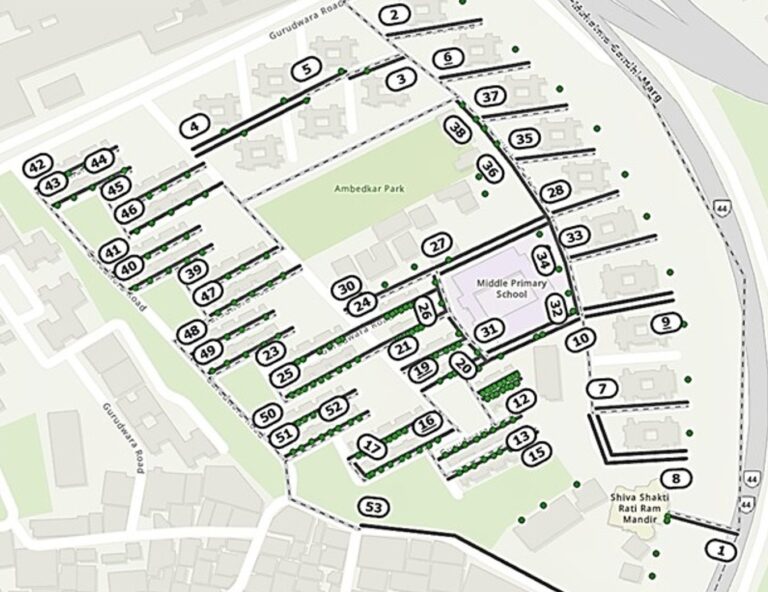
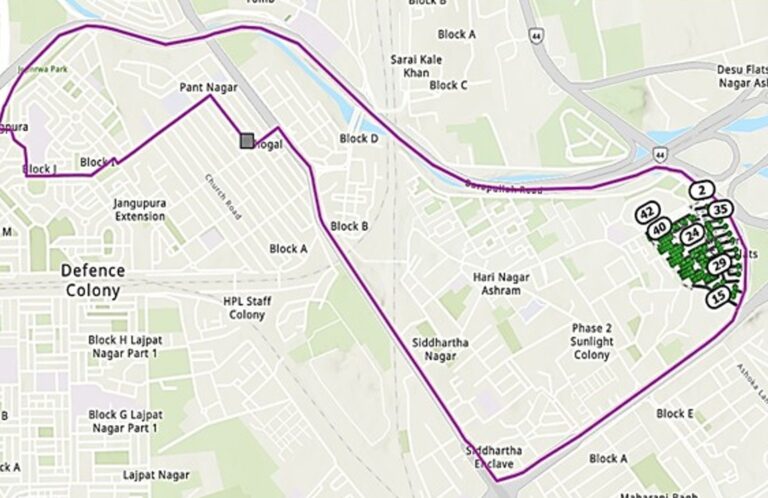
At its core, the solver takes three inputs: stops (every household that needs collection), depots (where vehicles start and end their day), and routes (the fleet of trucks with their capacities, shift durations, and operating constraints). It then determines which truck services which household, in what sequence, and when the truck should break away to empty at a landfill or transfer station called a renewal in the solver’s terminology.
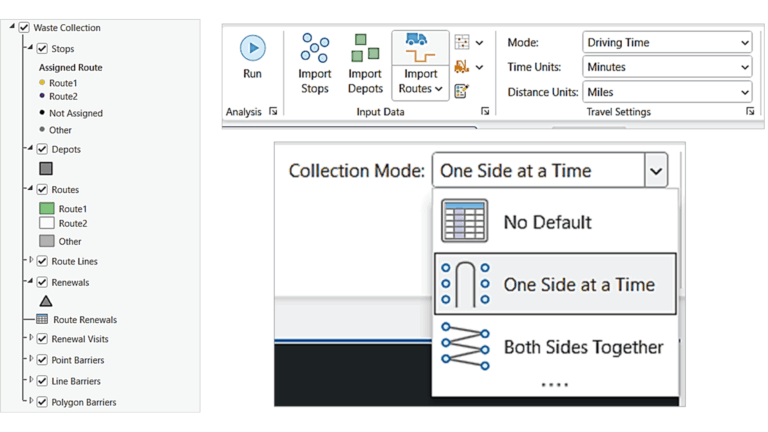
Several features make it uniquely suited to Indian conditions. The solver tracks two waste fractions simultaneously essential for cities that mandate wet and dry waste segregation. It supports both-sides and one-side collection modes, which matters enormously in India where narrow galis (streets) require single-side servicing while wide arterial roads allow both-side collection in a single pass. It produces geographically clustered routes that keep trucks within compact zones rather than zigzagging across the ward. It models mid-route renewals at transfer stations and landfills, automatically routing the truck to the nearest unloading point when its capacity is reached.
Use Cases for India
The Waste Collection solver’s capabilities map directly onto several high-impact waste management challenges that Indian cities and agencies are grappling with today.
1. Swachh Bharat — Municipal Solid Waste Collection
Plan daily door-to-door collection routes across entire wards. Assign each compactor truck its optimal stop sequence, auto-route to the nearest transfer station when capacity is full, and ensure complete coverage within driver shift limits. A typical large municipal corporation can optimize routes for 400+ vehicles across 85+ wards, cutting fuel costs by 15–25%.
Target: Municipal Corporations, Smart City SPVs, ULBs.
2. Segregated Wet & Dry Waste Collection
Model wet waste (Fraction 1/Bin 1) and dry waste (Fraction 2/Bin 2) with different vehicle capacities and different unloading points wet waste to composting facilities, dry waste to Material Recovery Facilities. The solver routes trucks to the right renewal location for each fraction automatically. The collection mode setting is critical for Indian lanes where narrow galis (streets) require single-side servicing versus wider roads where both sides can be collected in one pass.
Target: BBMP (Bengaluru), PMC (Pune), GCC (Chennai), BMC (Mumbai).
3. Biomedical Waste Pickup from Hospitals
Plan collection routes for Common Biomedical Waste Treatment Facilities (CBWTFs) picking up from hospitals, clinics, and labs. Use anchor rules to fix high-priority government hospitals as first-collect stops, ensuring compliance with the 48-hour collection mandate. Route capacity constraints ensure vehicles don’t exceed safe biomedical waste transport limits.
Target: CBWTFs, State Health Departments, CPCB.
4. Construction & Demolition (C&D) Waste Collection
Route heavy-duty trucks collecting construction debris skip bins to designated C&D recycling plants. Model road barriers (low bridges, weight-limited roads, narrow lanes) and configure travel modes for heavy vehicle turn restrictions and speed profiles specific to Indian road conditions.
Target: CPCB, State Pollution Control Boards, Municipal Engineering.
5. Rural Waste Collection Under SBM-Gramin
Cover scattered rural households across wide areas with limited vehicles. Geographically clustered routing prevents trucks from zigzagging between villages. MaxTotalDistance constraints model daily vehicle range limits imposed by poor road quality in rural India.
Target: Gram Panchayats, Block Development Officers, District Swachh Bharat cells.
6. Festival & Event Waste Management
Rapidly plan routes for temporary fleets during Ganesh Chaturthi, Durga Puja, or Kumbh Mela. Model event venues as high-density stops with elevated waste volumes, use barriers for road closures and procession routes, and route to temporary dump sites for quick turnaround.
Target: Mela Authorities, Municipal Event Cells, Traffic Police.
Mapping Solver Features to Suit Indian Needs
The power of the Waste Collection solver lies in how precisely its features align with the operational realities of waste management in India. The following table maps each solver capability to the specific Indian challenge it addresses.
| SOLVER FEATURE | INDIAN APPLICATION |
| Dual-fraction/bin tracking | Wet/dry waste segregation mandated under SWM Rules 2016 |
| Renewals (mid-route unloading) | Transfer stations, landfills, MRFs, composting units |
| Collection mode (one-side / both-sides) | Narrow galis (streets) vs wide arterial roads in Indian cities |
| Vehicle capacity (bins, weight, volume) | Compactor truck limits, C&D vehicle loads, biomedical waste caps |
| MaxTotalTime constraint | 8-hour driver shift compliance under Indian labour norms |
| Barriers (point, line, polygon) | Low bridges, weight-restricted roads, festival road closures |
| Anchor rules (first/last stop) | Priority collection at government hospitals, schools, offices |
| Geographically clustered routing | Ward-level collection patterns, compact rural village clusters |
The Path Forward
India’s waste management challenge is enormous, but it is fundamentally a logistics optimization problem, and the tools to solve it already exist. The ArcGIS Waste Collection solver, paired with Indo ArcGIS StreetMap Premium for offline road network data, gives municipalities a production-ready system for planning scientifically optimized collection routes without relying on internet connectivity or cloud services.
The impact is measurable and immediate. Cities that adopt route optimization typically see 15–25% reduction in total fleet travel distance, fewer missed households, better truck utilization, and reduced fuel and maintenance costs. For a large municipal corporation operating 500+ vehicles, this translates to crores of rupees in annual savings, while simultaneously improving service coverage for citizens.
The Swachh Bharat Mission set the ambition. The SWM Rules set the mandate. The Waste Collection solver provides the operational intelligence to actually deliver on both, one optimized route at a time.
Ready to Optimize Your City’s Waste Collection?
Learn more about the ArcGIS Waste Collection solver and how Indo ArcGIS StreetMap Premium can power offline waste collection routing for your municipality.
Additional resources
Below, we’ve added resources to help you understand the tool:
References
- https://www.ceew.in/publications/how-can-indian-cities-boost-sustainable-solid-waste-management-practices
- https://www.pib.gov.in/PressReleaseIframePage.aspx?PRID=2003989®=3&lang=2
- https://swachhbharatmission.ddws.gov.in/
- https://www.ceew.in/

Adya Bajpai is a Product Engineer at Esri India, specializing in ArcGIS Business Analyst, ArcGIS StreetMap Premium and enterprise GIS.