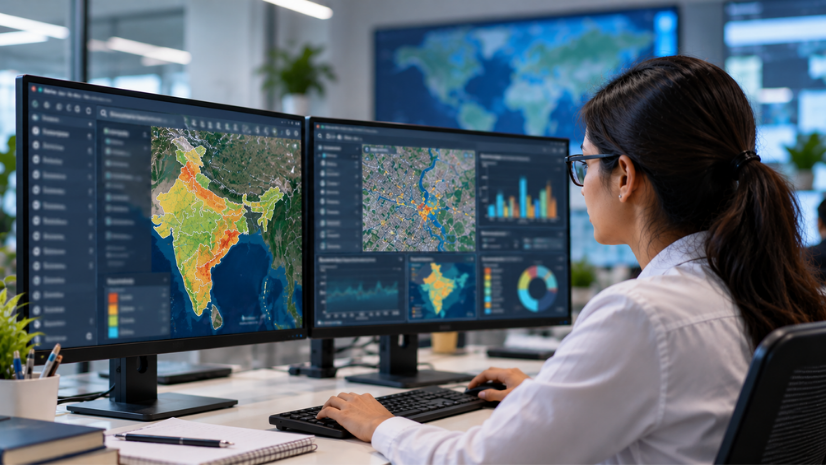
Satellite imagery gives us an incredible view of our agricultural landscapes. It captures details that are not always visible to the eye, revealing patterns that help in identifying what is growing on the ground. But training AI models for crop classification comes with its own challenges. Traditional models like ResNet treat remote-sensing data like ordinary photographs, often overlooking the subtle differences that distinguish one crop from another. The result is a classification map that feels uncertain and requires heavy refinement.
What crop classification workflows really need is a model that understands how remote-sensing imagery behaves – a model that reads multispectral signals with the same ease as analysts do. This is where remote sensing foundation models come as a game changer.
Need for Remote Sensing Foundation Models
For a long time, crop classification relied on models that struggled to adapt when data sources, regions, or conditions changed. Each iteration felt like starting over, with models learning basic patterns repeatedly before they could focus on the actual task.
This constant struggle was simply because the AI models we were using didn’t truly understand the language of the agricultural landscape.
They were built for everyday images not for the complex remote sensing imagery. This is where Foundation Models entirely change the game. Imagine an expert who has spent decades studying every corner of the planet through satellite eyes. A Remote Sensing Foundation Model is like that expert. These models are pre-trained on massive collections of Earth-observation data, capturing millions of examples like how crops grow, how rivers flow, and how landscapes evolve.
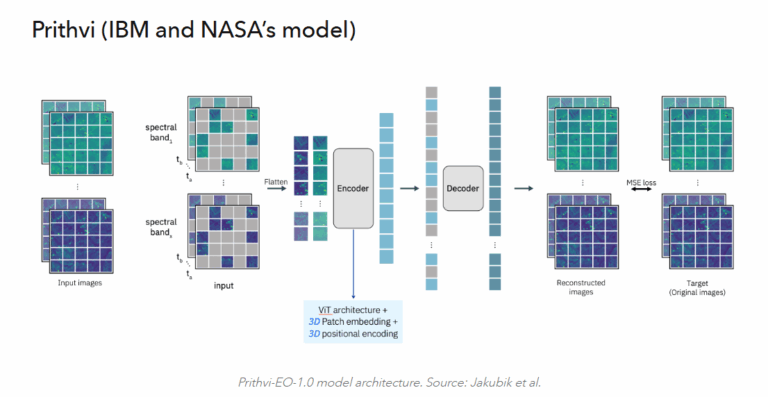
ArcGIS Pro helps us overcome this challenge by introducing the ability to use these specialized remote Sensing Foundation Models such as Prithvi and the Dynamic One-For-All (DOFA) model, as backbones. With their prior knowledge of satellite imagery, these models help crop classification move beyond repeated trial and error towards a more consistent and accurate workflow.
From Model to Map: Crop Classification in ArcGIS Pro
This workflow builds on Prithvi, a remote sensing foundation model developed by NASA and IBM. Trained in large volumes of satellite imagery, Prithvi begins with an understanding of how Earth’s surfaces appear across spectral bands. This allows the crop classification model to perform a better interpretation of the type of crops. Now, the real question becomes simple- how can we translate these models into an actual crop map?
The journey from foundation model to a final validated crop map is easy and takes place entirely within ArcGIS Pro.
Preparing the Data: Setting the stage
Every great result starts with great data preparation. For this study, we selected Sentinel-2 multispectral imagery as our primary source, relying on its consistency and ability to capture differences in vegetation health. Specifically, we focused on four key bands namely Blue (B2), Green (B3), Red (B4), and Near Infrared (B8), which are essential for distinguishing crops based on their chlorophyll content and canopy structure.
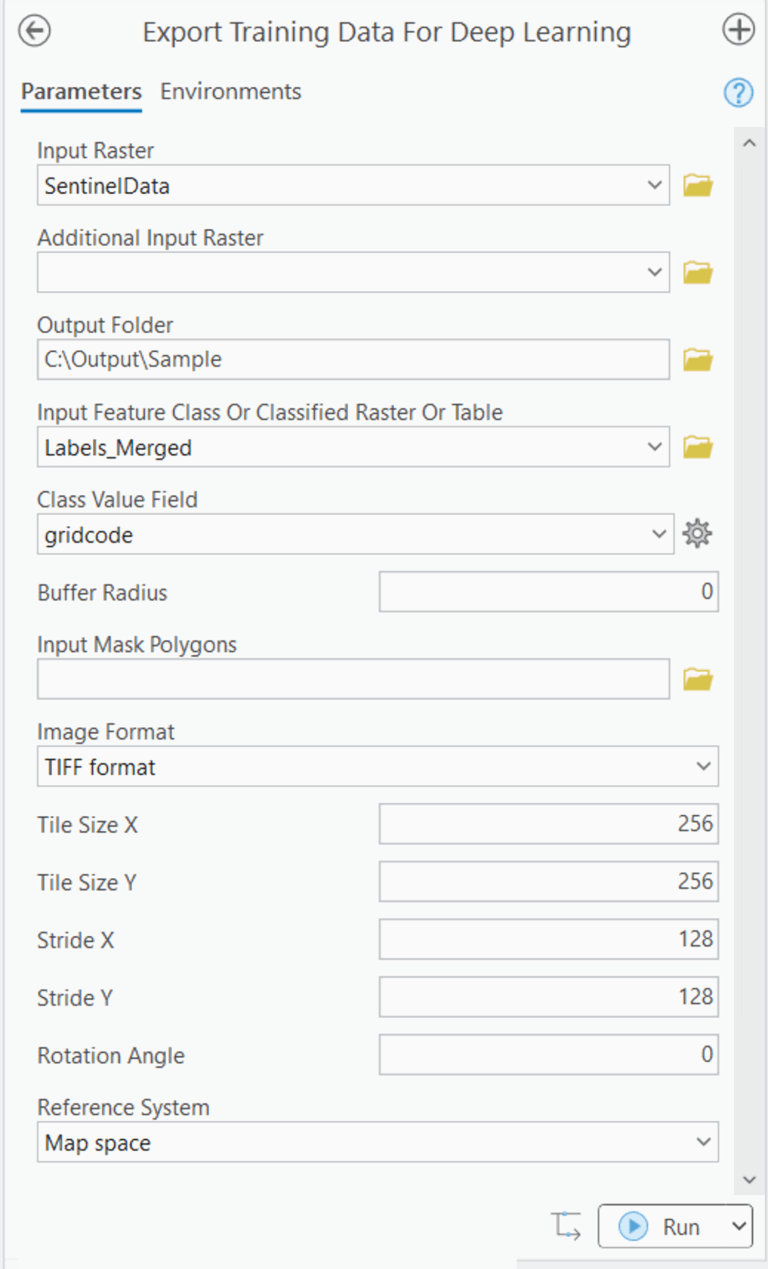
After clipping the imagery to our agricultural area of interest, the next crucial step was gathering the ground truth. We compiled crop-type polygons which served as the known labels for major kharif crops and carefully aligned them with the multispectral imagery. Finally, we used the Export Training Data for Deep Learning tool to package this information. This tool takes the imagery and the crop polygons and turns them into clean, structured training samples, where every pixel is assigned to the correct crop class. This gives our model precise, labeled examples of real Kharif-season conditions.
Training: Giving the model a remote sensing foundation backbone
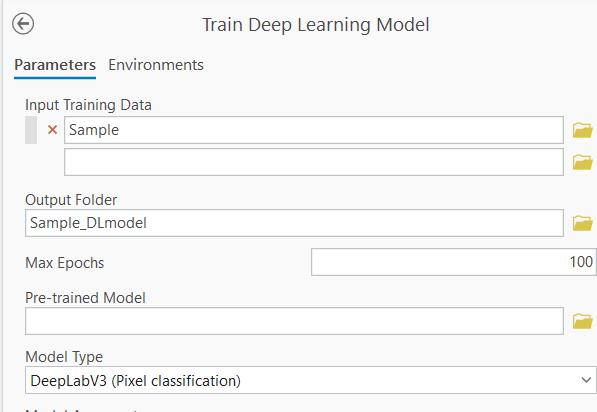
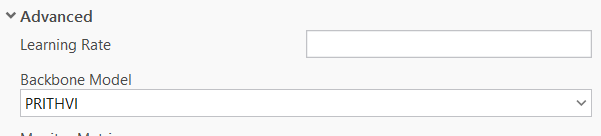
With the data prepared, we moved to the training phase inside ArcGIS Pro. We chose the DeepLabV3 architecture, which is a robust model known for producing detailed, pixel-level predictions—but we gave it a specialized brain: the Prithvi Remote Sensing Foundation Model as a backbone.
This is the core of our approach. Unlike standard models trained in generic photographs, Prithvi provides rich spectral-temporal features. The training process starts with a strong prior understanding of crop cycles and reflectance characteristics. This specialized knowledge ensures the model isn’t learning from scratch; it’s already built on a foundation of Earth-observation expertise. Once the training is completed, the crop classification model is available as a Deep Learning Package (dlpk), making it instantly ready for deployment.
The Final Verdict: Mapping and Accuracy Assessment
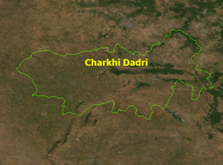
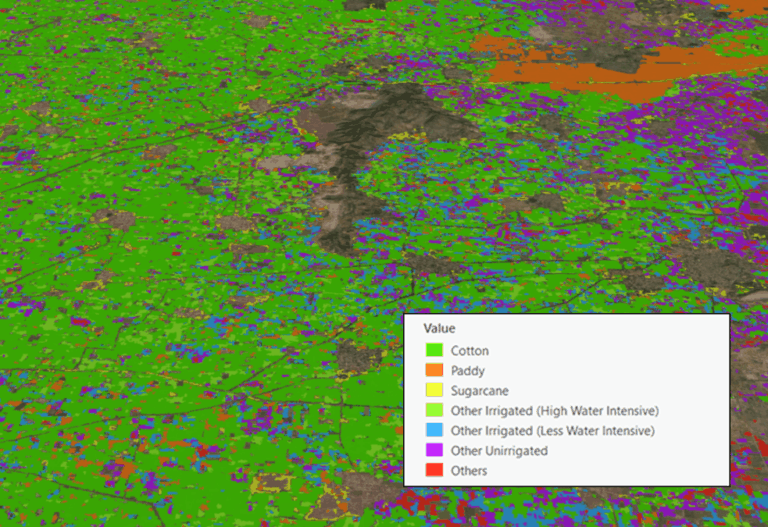
Finally, we reached the moment of truth, applying our trained model to the real agricultural landscape. The model was applied to infer crop types across the agricultural lands in the Charkhi Dadri region of Haryana using the Classify Pixels Using Deep Learning tool. The model processed the full scene and gave a crop classified raster as output that showed well-defined patterns and clear distinctions between classes like Cotton, Paddy, and Sugarcane.
To ensure that the results are reliable, we performed a thorough validation using a separate set of ground-truth points that the model had never encountered during training.
The results were compelling: the overall accuracy reached approximately 92%. Cotton achieved close to 90% accuracy, and Paddy performed even better, exceeding 96%.
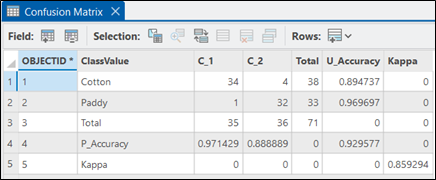
This confirmed that the combination of DeepLabV3 and the Prithvi foundation model successfully captured the subtle, crop-specific spectral signatures across the landscape.
The successful workflow makes one thing clear: the era of struggling with generic AI for agricultural analysis is over. The combination of ArcGIS Pro & remote-sensing data aware foundation models like Prithvi is the solution for analysis-ready accurate crop classifications. This advanced GeoAI approach, operationalized entirely within ArcGIS Pro, achieves reliable results with speed and consistency. This is what modern agricultural intelligence looks like when GeoAI moves from promise to production.

Sreebhadra is a Senior Engineer and works on translating GeoAI capabilities into practical ArcGIS solutions.