Government departments, statistical agencies, and planning organizations are the architects of a nation’s data, generating massive collections of PDFs, reports, and publications that contain rich, structured information. However, most of this valuable data remains locked inside those unstructured documents, making it incredibly difficult to search, analyze, or integrate into existing GIS workflows.
Think about annual abstracts, census reports, or policy documents. These are often filled with multi-page, multi-format tables. The traditional method of extracting this meaningful data is painfully slow, prone to errors, and impossible to scale and requires significant manual effort.
If you’ve ever tried to copy a multi-page table from a PDF into a spreadsheet, you know the real struggle!
The GeoAI Solution: Table Extraction in Seconds
Fortunately, now we have a way to unlock this data using advancements in GeoAI models within ArcGIS Pro. This modern approach makes it possible to automatically extract clean, structured tables from even the most complex, multi-page statistical reports with revolutionary speed and high accuracy.
This process leverages the new pretrained Table Extraction Model within ArcGIS, allowing organizations to convert static PDF tables into mappable formats in seconds, enabling seamless integration with spatial analysis and decision-making workflows. This AI-based approach significantly reduces manual effort, improves data consistency, and most importantly unlocks the hidden spatial value embedded in these traditional paper-based reports. You can access the model from here.
From Static Tables to a Living Map: Understanding Employment Distribution Patterns in Haryana
Haryana’s Statistical Abstract is a comprehensive, information-rich PDF packed document with numbers on industries, employment, and population. On paper, it’s a goldmine. In practice, it’s a challenge to do geospatial analysis leveraging this data.
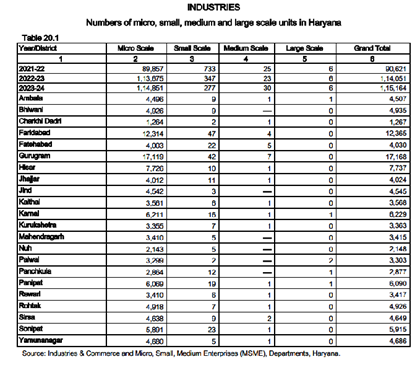
For someone trying to answer a simple question like “Which districts in Haryana have the highest concentration of industrial employment?”, the journey usually begins with scrolling through hundreds of PDF pages, squinting at multi-page tables, and manually copying rows into spreadsheets. It’s tedious, time-consuming, and let’s be honest it’s not very exciting to do.
This is where the story takes a turn.
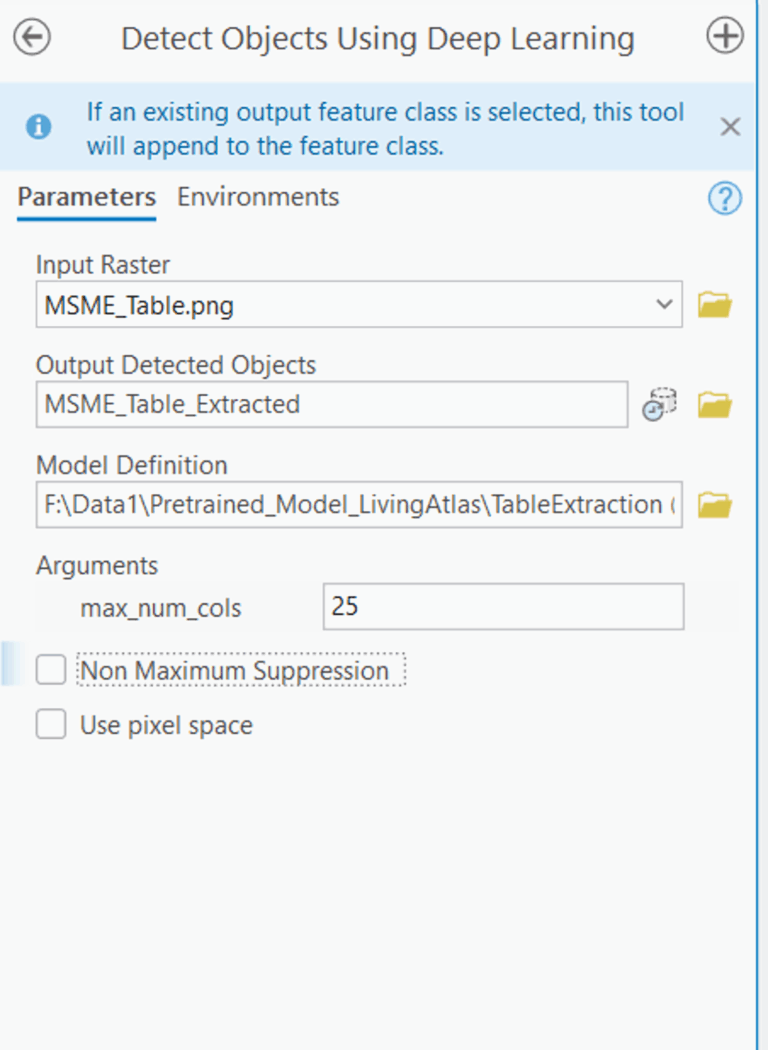
Using the Detect Objects Using Deep Learning tool in ArcGIS Pro and the pretrained Table Extraction Model, the selected PDF pages were processed to identify table boundaries, rows, and columns.
The model automatically recognized where tables began and ended, even when the table followed inconsistent formatting patterns.
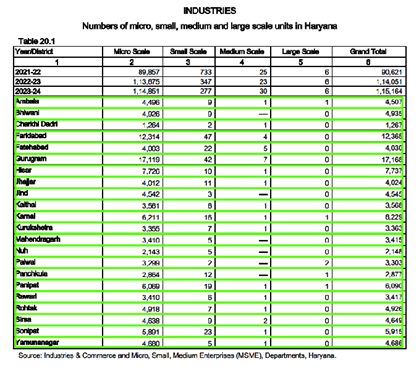
Once detected, the tables were converted into clean, structured datasets that could be directly used within GIS workflows. What had previously existed as static visuals inside a report now became analysis ready data. This step alone transformed hours of manual effort into a process that could be completed in minutes.
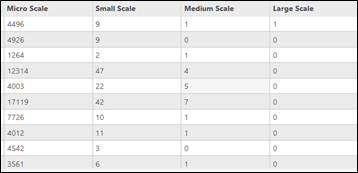
Turning Numbers into a Map
The real value emerged when the cleaned datasets were spatially integrated with district boundaries in ArcGIS Pro. What began as tables and PDFs quickly transformed into meaningful visual insights. Districts with higher employment absorption stood out, industrial clusters became evident, and patterns that were hidden in static documents were instantly visible on the map.
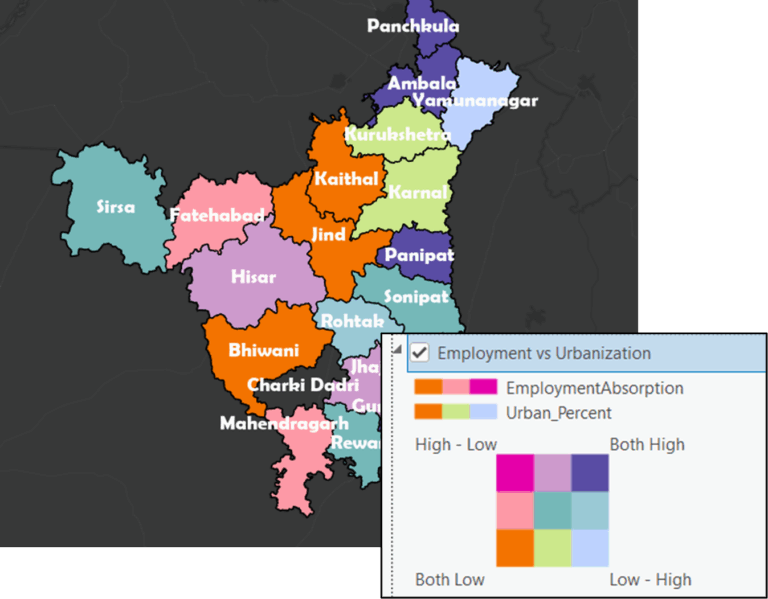
This is where GeoAI changes the way data is used. Instead of reading reports, analysts explore spatial patterns. Policymakers can quickly identify regions with strong industrial presence, planners can compare workforce concentration with population distribution, and analysts can ask better questions without manual data wrangling.
By combining AI-driven document processing with GeoAI in ArcGIS Pro, traditional government reports evolve from static records into dynamic, decision-ready spatial datasets, enabling faster insight generation and more informed planning.

Sreebhadra is a Senior Engineer and works on translating GeoAI capabilities into practical ArcGIS solutions.