Cover Story
GIS Mapping a Better Future
GIS provides a platform to store, manage, and analyze geospatial data to help make informed decisions in a variety of fields.
GIS IN EDUCATION
Fostering Sustainable Design Thinking through GIS-integrated Education
Integrating GIS education into architecture and planning programs is essential for preparing students to address complex spatial challenges in contemporary built environments. Through an interaction with Dr. Prafulla Parlewar, Head and Professor of the Department of Urban Planning at the School of Planning and Architecture (SPA), New Delhi, let’s explore how GIS education enables future architects and planners to make more informed and data-driven decisions.
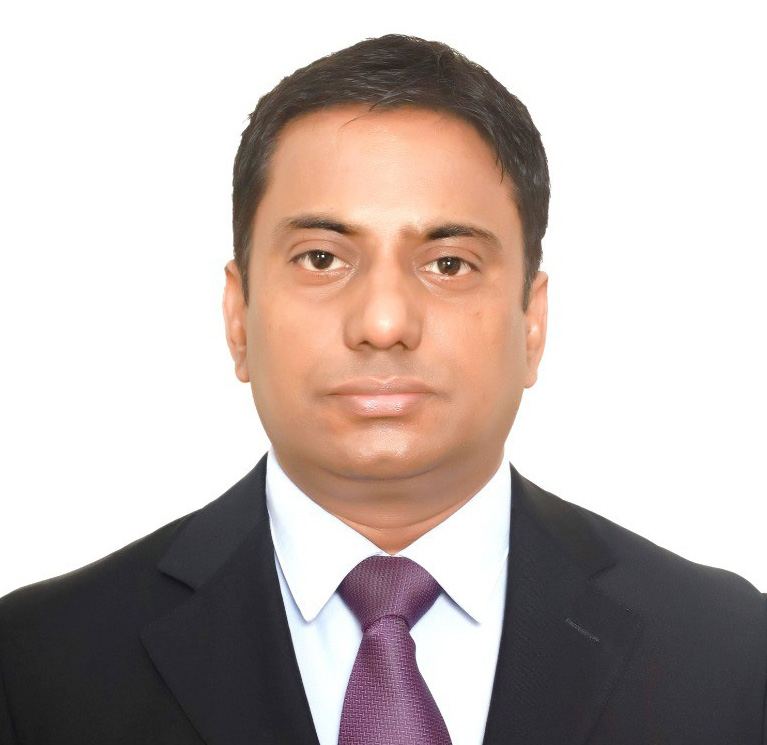
At the School of Planning and Architecture (SPA), Delhi, we have made it a priority to integrate GIS and geospatial technologies into the core of our academic framework. The integration of these tools within the curriculum across our various departments is a key focus for us. Students gain practical experience in our studios and various established centres, including the Centre for Analysis and Systems Studies (CASS), which encompasses the Centre for Remote Sensing and the Centre for Excellence in Urban Planning and Design. They work with industry-standard software such as ArcGIS.
In the realm of research, it is evident that both faculty members and scholars are leveraging these technologies to a significant extent. They utilize them for modeling intricate urban and regional challenges, as well as for conducting thorough data analysis. This work frequently involves the integration of AI and machine learning, resulting in innovative applications across various domains such as deep learning, digital twins, and advanced simulations. We conduct regular capacity-building workshops aimed at our students, faculty, and external professionals to ensure they remain informed about the latest advancements in the field.
We aim to establish a collaborative environment that benefits both the industry and our students. This involves providing the industry with a steady flow of talent while offering our students a practical platform to apply and refine their skills in real-world scenarios. This exposure allows our students to cultivate skills that extend beyond mere technical proficiency. They demonstrate a unique ability to think strategically. Graduates from SPA Delhi emerge not merely as analysts, but as future leaders and urban strategists. They are equipped to take charge in any setting, tackle challenges that others might consider insurmountable, and spearhead the integration of technology within the country’s most prominent organizations.
Our institute views its role as crucial in fostering a sustainable future for cities in India. We take this responsibility very seriously and are committed to executing it with the utmost effectiveness. We are deeply committed to addressing critical urban challenges, such as unplanned growth and environmental stress, through our educational philosophy. Our focus extends beyond merely producing architects and planners; we are dedicated to nurturing the visionaries who will address and resolve India’s most urgent urban challenges. Our curriculum aims to develop professionals who adopt a holistic approach, seamlessly integrating infrastructure development while tackling challenges related to environmental, social, and economic factors. Our objective is to cultivate a generation equipped to design and oversee the sustainable, equitable, and resilient cities of the future. Our alumni have not only entered the field but are also at the forefront, occupying significant roles in both government and industry and actively shaping the future of urban development in India.
The integration of GIS, AI, and a focus on human-centric design, in my view, clearly shapes the future of urbanism. This convergence presents exciting opportunities for creating more efficient and livable urban environments. We are on the brink of a transformative phase in data-driven planning. AI-powered analytics will significantly improve our comprehension of urban dynamics. For many years, the approach to planning has relied on inflexible and unchanging blueprints, which tend to lose their relevance quite rapidly. Our institute is at the forefront of transforming the traditional model into something more innovative and relevant. In our studios and research, we approach the city as a dynamic and adaptive system rather than a static entity to be illustrated.
In today’s evolving landscape, we see a significant need for a new type of professional, one who embodies the qualities of both a planner and a technologist. Our focus is on developing a hybrid professional who possesses a strong command of both Python and machine learning algorithms, alongside a profound understanding of planning theory and public policy. Our curriculum is designed to equip students with the skills to build predictive models for urban growth, utilize AI to optimize infrastructure, and apply generative design not only for aesthetic purposes but also for addressing complex social challenges. These individuals go beyond merely utilizing technology; they are the visionaries shaping the future of planning tools.

To download the PDF version of this article, click the button below.
GIS provides a platform to store, manage, and analyze geospatial data to help make informed decisions in a variety of fields.
The MCD GIS citizen portal is a step towards better governance taken by the Municipal Corporation of Delhi to allow the citizens of Delhi to avail various services through an easy-to-use interface along with geo-referential data.

In the heart of Rajasthan, R-CAT (Rajasthan Centre of Advanced Technology) emerges as a beacon of innovation and knowledge. Established by the Government of Rajasthan, it’s not just an institute- it’s a gateway to the future.
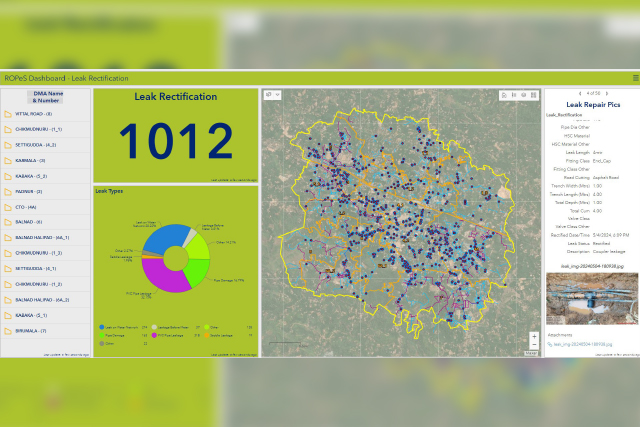
Suez Group has been active in the Indian water and wastewater market since 1978 and established an Indian subsidiary in 1986. Suez uses Esri products to enable comprehensive study and planning through GIS mapping, field surveys, and door-to-door surveys.