Cover Story
GIS Mapping a Better Future
GIS provides a platform to store, manage, and analyze geospatial data to help make informed decisions in a variety of fields.

Cover Story
Table of contents
Geographic Information System (GIS) is a crucial technology that has proven its capabilities across multiple domains such as environment conservation, natural resources management, urban planning, disaster and emergency management, agriculture, healthcare, utility management, retail, telecommunications, manufacturing, banking, insurance, etc. It is driving progress in these sectors by offering unique advantages like enhanced information sharing among multi-location teams, improved progress monitoring, superior asset management, increased productivity, and significant time and cost savings.
 Geo AI: Integration of Artificial Intelligence and Location Intelligence
While the population of the world is growing exponentially, the land available to accommodate the same remains limited. It is shrinking in size with every passing day. The need of the hour is not just urbanization but smart urbanization; to plan urban development smartly to accommodate more in less, and that too nicely and efficiently. By using GIS in urban planning, planners can take urbanization to new scales.
The most frequently involved sectors of urban planning include land use, transport, housing, land development, and environment. Each scale of planning involves different stages: the determination of planning objectives; the analysis of existing situations modeling and projection; development of planning options; selection of planning options; plan implementation; and plan evaluation, monitoring, and feedback. The different functions, scales, sectors, and stages of urban planning make different uses of GIS.
Gurugram Metropolitan Development Authority (GMDA) embarked on an ambitious e-government initiative, aimed at enhancing responsiveness to citizens’ needs; increasing operating efficiency and effectiveness; improving financial health, and ensuring greater transparency within various departments. It launched an innovative GIS-integrated Decision Support System named “OneMap Gurugram” in 2019. The data-driven system includes various GIS applications for e-Governance including a mobile app. OneMap went live with a huge amount of data available at a single click. The data is distributed under various heads, including wet and dry infra health, homeland security, planning, land governance, power, citizen-centric services, etc. Initially, there were 12 live applications on OneMap, which soon became available on the mobile app. Currently, more than 25 live applications on the OneMap Portal are helping the government to enhance collaboration and citizen engagement. Projects like ‘Crop Survey’ and ‘Ease of Doing Business’, which are part of OneMap Gurugram are enabling the authorities to extend the benefits to the State level.
The robust GIS-integrated Decision Support System (DSS) developed using Esri’s ArcGIS technology has taken collaboration between different departments and citizen engagement to new levels. The System provides updated data about the various aspects of the city on a unified platform leading to better governance, higher vigilance, improved citizen-centric services, and higher citizen engagement.
GIS provides planners, surveyors, and engineers with the tools they need to design and map their neighborhoods and cities. Using ArcGIS Urban, administrators can analyze, visualize, and evaluate the demographic needs of the community, and planners can design and measure the impact of multiple housing scenarios. The technology enables planners and design professionals to collaborate across teams with a web-based 3D application that supports scenario planning and impact assessment. By incorporating ArcGIS Urban into a comprehensive planning process, planners can more easily assess land-use changes to meet future demand.
GIS helps to store, manipulate, and analyze the physical, social, and economic data of a city. It aids in monitoring an area or conducting the feasibility study of a location for a specific purpose, for instance ascertaining the suitability of a location for the construction of a bridge or dam. It also helps in identifying changes in geographical features or behavior of a land over a specified time. Such information enables professionals to make informed decisions about the development condition of an area and plan accordingly.
Planners make use of GIS also to smooth the progress of citizen participation and community input as they develop a vision for the community that enhances the quality of life for all citizens. Citizens are the life and blood of any city and first-hand input from them as to what can be done to make their city smarter can aid in crafting amazingly productive methods/means for urban planning. Smart community planning prioritizes the human element in designing the communities. Esri provides the technology to make it happen. Esri’s smart city technology helps planning professionals determine how, where, and when their designs can have the greatest impact on improving the quality of life.
Esri India has worked with more than 45 Smart Cities, enabling the stakeholders to accomplish the objective of ‘providing exceptional citizen experiences.’ These cities have established GIS platforms or Geo-Hubs with Esri’s ArcGIS technology, which has helped them to achieve excellence in urban planning and administration.
Geo AI: Integration of Artificial Intelligence and Location Intelligence
Today’s smart infrastructure projects necessarily warrant the usage of advanced technologies such as GIS, BIM, Digital Twins, etc. In large infrastructure projects, the cost overruns are usually in the 20% to 60% range. By using GIS and associated BIM technology, an average of 13% in terms of cost savings can be realized. GIS plays a crucial role in assisting project teams in site selection and evaluation based on geographical, resource, and environmental factors. It enables building professionals to visualize the landscape, strategically plan structure placements, and harmonize the built environment with nature. This location-based approach proves valuable in planning roadways, railways, and airports, allowing planners to assess terrain and environmental variables along proposed routes for optimal and environmentally conscious decisions. Esri’s ArcGIS portfolio supports the end-to-end Architecture, Engineering, and Construction (AEC) value chain.
Esri solutions are conceptualized and developed embracing Findable, Accessible, Interoperable, and Reusable (FAIR) principles. Supported by intelligent mapping and data capture tools for Geodesign, intuitive visualization for enhanced situational awareness, advanced geospatial analytics for operational intelligence that is actionable, and multimode dissemination for sharing and collaboration among stakeholders, ArcGIS AEC solutions foster transparency, efficiency, and cost optimization across the value chain.
Esri’s ArcGIS GeoBIM enables organizations to provide rich geospatial context to architecture, engineering, construction, and facility management projects. By bringing GIS and BIM data together, ArcGIS GeoBIM allows users to incorporate and use data from multiple systems, access project data from a common experience, explore GIS and BIM data side by side, collaborate and share information with stakeholders, and minimize costly data conversions. Using AEC Project Delivery, users can extend internal GIS content and context to resources outside of the organization. This allows them to collaborate and share information directly with stakeholders.
AEC firms are also increasingly leveraging the idea of integrating GIS and digital twins for abstracting and modeling everything to enhance business processes, mitigate risk, optimize operational efficiencies, and boost decisionmaking. ArcGIS Reality helps in building geo-referenced Digital Twins of Urban areas to address issues like better utility management, urban flooding, safety and security, etc.
Varanasi Smart City Limited (VSCL) used Esri’s ArcGIS to create an enterprise-wide integrated City GIS to address the four major problems of the city: solid waste management, environmental monitoring, traffic management, and integration with smart streetlights. In the process, multiple data sources and data levels became available for analysis, including information on administrative boundaries, public services, religious places, education and health, tourism and recreation, transportation, water bodies, and locations of infrastructure related to water, sewerage and drainage systems in the city.
The team at VSCL created the Kashi Integrated Command and Control Centre (ICCC) to visualize and address the problems in real-time. The ICCC uses location-based technology to manage traffic safety and city security. The ICCC has also proved to be a versatile mechanism for rapid emergency response.
Varanasi 3D
Esri India has also created a 3D GIS for Varanasi City. The portal shows the entire Varanasi City land use in 3D, which helps in understanding the building scape of the city, and how it has grown over the years through density aspects. There is a set of analytical themes, and each one represents a 3D thematic map of a particular aspect or problem of the city. The 3D themes, when incorporated in dashboards, help in understanding the data in a better way. The portal also enables the planning of buildings, street lights, or cameras in the city.
Utilities are an integral part of any city. GIS has proved to be an irreplaceable tool for demystifying utility data and providing location-rich “contextualized” insights. For addressing the complex challenges utilities are faced with, the “Geo-Enabled Smart Utility Management” approach provides a bird’s eye view of the utility infrastructure with the ability to narrow it down to individual assets and consumers.
Along with tools for analysis, visualization, modeling, and collaboration - GIS amplifies the digital utility operations multifold by enhancing situational awareness along with actionable intelligence for informed decisions both at regional and local levels.
ArcGIS Utility solutions are making access to contextualized information easier than ever, helping utility CXOs address their priorities better than before. They are helping organizations to stay agile in the changing times and drive innovation. By augmenting existing frameworks with ArcGIS Utility Network, utility CXOs can enhance their business value delivery while optimizing operations for improved efficiencies and increased customer satisfaction, paramount for a sustainable future.
Power utility companies like Sterlite Power, BSES, and AEML, are leveraging ArcGIS to improve their operational efficiencies and provide enhanced services to their consumers. In the oil and gas sector, IOCL, Gujarat Gas Limited, Mahanagar Gas Limited, and many others have been leveraging ArcGIS to achieve excellence in their operations and asset management.
Built using ArcGIS, India WRIS is a one-of-its-kind comprehensive Water Resources Information System (WRIS) that provides authoritative, and consistent data and information on India’s water resources and allied themes. This information enables the stakeholders to achieve highly effective outcomes in the planning, development, and management of water resources in the country.
Telecommunications
The two major telecom service providers (TSPs) in India, Reliance Jio and Airtel have harnessed the various capabilities of ArcGIS to achieve the most effective outcomes in network planning to management. ArcGIS enables them to map their network assets along with their coverage capacities.
The technology allows the teams to collaborate, share, and perform a variety of spatial analyses such as identifying coverage blind spots, hotspot analysis, and network route planning.
As the telcos transition from 4G to 5G, they rely on 3D geodata to accurately predict their 5G network coverage and deliver the quality of service the customers expect. 5G networks demand a more sophisticated approach to network planning due to their reliance on millimeter-wave frequencies, which are highly sensitive to environmental factors such as building structures, vegetation, and terrain variations. As traditional 2D maps fail to capture the intricate details necessary to accurately assess signal strength and quality, 3D mapping techniques have become a necessity in 5G network planning.
Esri’s geospatial capabilities leverage 3D maps, LiDAR, drone-based surveys, and GIS coverage analysis to help telcos in site identification network planning and designing. ArcGIS Pro enables the creation of detailed 3D models at any scale – from individual sites to entire cities and regional geographies – which serve as the foundation for digital twins. Along with asserting its leadership in 5G, India aspires to connect over 20 crore rural and urban households with broadband services by 2030. To increase broadband penetration from the existing 13% to 80%, we are looking at a huge deployment of digital connectivity infrastructurefibre, mobile towers, data centers, satellite broadband, wifi, etc. GIS will be a crucial enabler here as well, enabling stakeholders to achieve unmatched precision and cost and time efficiency in the projects. GIS-powered digital twins will enable the stakeholders to achieve excellence in network planning, coverage, maintenance, and management.
GIS-based digital twins extend beyond 3D models by incorporating temporal dimensions, showcasing historical, present, and projected future states. This temporal aspect enables users to track changes over time, facilitating better decision-making and planning. By integrating real-time data and predictive analytics, GIS-based digital twins provide a comprehensive understanding of dynamic environments, allowing stakeholders to anticipate trends, mitigate risks, and optimize strategies.
Recognizing the immense capabilities of digital twins in solving challenges across industries, the Government of India is also investing in unique digital twin initiatives. The initiatives aim to carve out a position of leadership for India in digital infrastructure and innovation by combining the prowess of 5G, IoT, AI, AR/VR, 6G, Digital Twin, and next-gen computational technologies. Esri’s ArcGIS technology aims to become a crucial enabler here by facilitating enhanced data capture and integration, better real-time visualization, advanced analysis and automation of future predictions, and information sharing and collaboration. Using ArcGIS, the stakeholders can achieve unparalleled context and highresolution data integration for better business decisions.
A comprehensive GIS solution built using ArcGIS allows Gujarat Gas Limited (GGL) to map and manage gas assets efficiently.
In terms of engineering, planning, and design, the GIS system facilitates route planning, project estimating, network simulation, design clearances, and reinforcement and replacement planning.
For construction and projects, it aids in construction planning, network identification, route analysis, and risk assessment. Maintenance activities benefit from the system through maintenance planning, patrolling, valve chamber maintenance, shutdown planning, and providing data for root cause analysis.
In emergency response, the GIS system ensures quick response, isolation and squeeze-off analysis, efficient complaint handling, and crew monitoring.
The GIS solution has yielded several quantifiable benefits for GGL. These include significant cost savings through optimized route planning, efficient project estimating, and streamlined maintenance activities.
Manpower utilization has improved as a result of enhanced crew monitoring and efficient emergency response. Productivity gains are notable in terms of reduced hours spent on planning and increased operational efficiency. The GIS system has substantially improved data accuracy, contributing to better decisionmaking across various operational domains.
Disaster Management is an ongoing process along with the development plans of a region, including cities. Be it modeling through early warning systems or using decision support systems to understand which disaster is going to affect or is affecting which region the most, GIS can help mitigate the risks of a disaster to a great extent. Using GIS, preparations can be better, efforts can be more directed, and responses can be faster. GIS enables the response teams to gain situational awareness, engage with the public, and understand the impact of the event. As GIS leads to better identification of the affected areas and people, recovery becomes easier and faster.
ArcGIS provides powerful capabilities that aid in identifying, assessing, and understanding risks that cause disasters and emergencies. With its advanced capabilities for mapping, imagery, and remote sensing, ArcGIS enables users to visualize, analyze, and manage data in 2D, 3D, and 4D to gain new insights for prevention, mitigation, and informed decisions.
Geo AI: Integration of Artificial Intelligence and Location Intelligence
Prevention: Using multidisciplinary factors and historical data, ArcGIS tools aid in improving predictions regarding subjects that will be impacted. Such localized evaluation helps in proactive measures to deal with the impact of the disruptions. By integrating real-time data from sensors/IoT devices and social media on maps and big data capabilities, agencies can identify temporal patterns and extract actionable location intelligence. By analyzing dependent factors, agencies can have a bird’s eye view as well as the ability to drill down to details to assess accurate situations on the ground and plan remedial actions.
Response: Situational awareness along with actionable intelligence being the key factor, it is important that all responders are armed with updated information as situations dynamically evolve and data-driven decisions are taken. Be it evacuation routes, rehabilitation shelters, or other services that are key to successful response operations, it is updated information presented in a spatial context that makes the difference and helps stay ahead. The GIS-enabled mobile apps support field operations, community and citizen engagement by bridging the gap between teams on the ground and command-control reducing response times and maximizing resource utilization.
Rehabilitation and Recovery: The aftermath of disasters warrants a methodical recovery. While Post Disaster Needs Assessment (PDNA) is the first step toward a holistic recovery, it is important to recognize that the disaster recovery process goes beyond the PDNA and aids in identifying a criteriabased prioritization, planning, and implementation of the recovery agenda. GIS plays a critical role in ensuring that disaster recovery processes are prioritized and embrace inclusiveness, resilience, and sustainability. Situation analysis using dashboards, impact analysis tools, and workforce management tools helps in providing prioritized relief to affected citizens and their needs in the shortest time. This enables the affected communities to build back in a more adaptive way. The information and knowledge shared during the process supports in building actionable agendas for strategic planning, disaster risk reduction, and policy decisions to strengthen resilience.
Esri India’s Indo ArcGIS offers specially curated solution products for disaster management. This Indo ArcGIS Solution provides automated alerts and live feeds for active hazards and possible disasters. It helps in locating available resources for efficient disaster response and mitigation and assessing population and area under disaster impact. It also provides simple-to-use apps for effective decision support in the middle of a crisis. The Volunteer Registration Solution provides an interface to the public for registering as a volunteer in case of disasters with location details. It enables disaster managers to check location-wise volunteers’ status, helping them to plan actions as per the availability of the resources.
“Good health and well-being” are essential for achieving sustainable living conditions for the citizens of any region. GIS is the core foundation of all the key public health functions - assessment, policy development, assurance, and operational awareness. To devise effective healthcare strategies for communities, agencies need to be able to respond to questions such as:
GIS provides answers to these, enabling public health agencies to take larger steps in addressing national healthcare needs. It stands out as a game-changing technology for health systems focused on delivering personalized care. By providing a nuanced approach to understanding and communicating with various patients and communities, GIS opens doors to modernized outreach, tailored messaging, and informed decision-making.
GIS enables health systems to capture, analyze, and present data in impactful ways such as calculating access to care for patients, examining the health impacts of a community context through the social determinants of health model, and implementing service reconfigurations that align with local needs. GIS not only makes a healthcare agency’s data more valuable, whether it comes from an electronic health record system, claims, and billing systems, or other data warehouses, but also makes it easy to source and use additional reliable platforms such as the Indian edition of ArcGIS Living Atlas.
Every day the technology ecosystem is evolving rapidly. Health agencies are collecting more and more data for analysis to build further efficiencies and effectiveness in their decision-making, operations, and processes. Integration of AI, ML, big data, and data science methods and tools with spatial analysis enables more accurate, efficient, and productive insights with potential applications across several disciplines within public health, precision medicine, and the Internet of Things-powered smart healthy cities. These can help in predictive modeling to identify populations at high risk for disease, in healthcare delivery of telemedicine/ mobile health to the masses or even integrating social media feeds for syndromic surveillance. GIS will continue to be the core foundation to support the health tech revolution we are witnessing.

Businesses are core to the development of cities, livelihood, and services to urban populations. GIS empowers businesses to make better-informed decisions by providing actionable insights derived from spatial data analysis. By leveraging GIS technology, businesses can gain a competitive edge, optimize their operations, and achieve their strategic objectives more effectively.
GIS can help them get answers to key questions including, where are markets shifting? Where are the best customers? Where are operations at risk? Where are products and services delivered? In a constantly changing world, GIS technology provides greater business intelligence for more successful, resilient organizations that can withstand the most severe disruptions and thrive to better serve their stakeholders.

Brick-and-mortar retailers fell behind with such optimization because they lacked good data on where customers spent time in their stores. Now, through IoT and location technology, that’s changing. At the intersection of the Internet of Things and location, executives have found hidden reserves of business intelligence. Esri’s GeoEvent server helps executives connect and monitor real-time feeds and IoT data. ArcGIS Velocity is a managed SaaS for processing real-time IoT and big data analytics. It enables visualization, scalability, and spatial analytics.
3D and augmented reality technologies are reshaping our interaction with spatial data. These innovations are crucial in urban planning and infrastructure development, offering immersive experiences and detailed insights.
As augmented reality (AR) becomes increasingly common in phone, tablet, and computer applications, more developers are expected to integrate GIS services and content to fulfill practical and real-world needs. The fusion of GIS and AR makes GIS data and analytics more interactive, real-time, and user-friendly. A prime example of this integration is Esri’s AuGeo, which exemplifies the synergy between AR and GIS. AuGeo enables users to explore the possibilities of using ArcGIS data in an augmented reality environment. Esri envisions AR applications that leverage GIS data to assist professionals on-site by providing the most current and accurate information available via mobile devices.
For example, an ecologist might see real-time overlays of historical plant growth data while examining a forest, or a geologist could visualize underground mineral compositions without taking physical samples. This not only enhances the accuracy and efficiency of data collection but also provides immersive experiences.

Field workers can use their phone’s camera to view the location and orientation of buried water pipes and electric cables. An AR app can cross-reference GIS data with their location, effectively giving them an x-ray vision to see the infrastructure beneath. In addition to visualizing hidden elements, you can have access to their attributes, view engineering diagrams, and connect to real-time sensor networks to check details like water pressure or electrical amperage. The augmented displays can also be synced with a GIS-enabled work order system for access by project managers and field crews. The true excitement of combining AR with GIS lies not just in visualizing GIS content but in integrating that content seamlessly with other enterprise systems. Traditional GIS maps and models, while detailed, often require specialized knowledge to interpret. AR transforms this by rendering GIS data in three dimensions and overlaying it onto our physical surroundings, making spatial information more interactive and tangible.
For instance, a city planner on a proposed development site can use AR to visualize underground utilities, potential skyscraper shadows, or historical data layers in real-time. This immersive perspective enhances decision-making and planning. Additionally, when AR is incorporated into public participatory GIS, it democratizes spatial planning. Residents can virtually experience proposed changes to their neighborhoods, leading to more informed discussions and collaborative urban planning.
AR is also revolutionizing disaster simulations for training and preparedness. Rather than relying on traditional drills or lengthy procedure manuals, first responders can engage in highly realistic AR-enhanced scenarios. Whether simulating the aftermath of an earthquake or practicing evacuation procedures during a flood, AR provides a more immersive experience.
AR and GIS seem to be a perfect match, not only for consumers but for professionals who rely on geographic information to make real-time decisions.
Orange County Waste and Recycling is an agency that operates three landfills. These landfills are among the largest in California and receive more than four million tons of solid waste annually. A critical safety concern at landfills is monitoring and regulating waste stockpile temperatures. OC Public Works equipped drones with thermal imaging infrared cameras to test a way of detecting the surface temperature of stockpiles.
As the surface of stockpiles reached a specific heat threshold, staff would manually record the internal temperature of each stockpile to mitigate the risk of an internal fire that could quickly spread. Although this process helped landfill managers, it lacked real-time awareness and an active approach to internal temperature control.
The county was already familiar with pulling live data streams from its fleet vehicles into GIS to know when to provide preventative maintenance. The same concept was applied to waste stockpiles. County GIS staff inserted Raspberry Pi sensors into each stockpile, and the sensors would record the internal temperature automatically. Then, using ArcGIS Velocity, staff programmed the sensors to feed the data into a web map and show real-time temperatures within each stockpile.
“For about $40 per device, we can deploy several sensors in different locations within a stockpile and collect precise insights 24/7,” explained Cameron Smith, GIS manager at OC Public Works. “Outsourcing this to a vendor would’ve cost the county tens of thousands of dollars yearly.”
Using ArcGIS Velocity, staff quickly set up sensors to feed maps with real-time temperatures of stockpiles. The landfill staff can click across the interactive map and retrieve the real-time temperature of each stockpile. Staff can also push alerts when internal temperatures have passed a certain threshold, putting time-sensitive information into the hands of managers and landfill personnel. In the future, county staff can integrate other sensors—such as methane or moisture sensors—to enrich their data even further.
 Sensors feeding and interactive map with real-time temperature of stockpiles
Crawford Properties, LLC, owns and manages a residential and commercial mobile home community in El Jebel, Colorado. The company is responsible for El Jebel’s 5.4 square miles of underground assets, including water, sewer, gas, and electrical infrastructure, which are needed to support this growing community just outside of Aspen, Colorado. Crawford’s staff needed a faster, more accurate way to record assets and their responses to 811 requests, reduce clerical errors, and mitigate any financial exposure due to inaccurate or slow response. Using the latest in geographic information system (GIS) and augmented reality (AR) technology, staff simplified how they locate assets and saved thousands in labor costs alone.
Crawford selected Argis Solutions to help solve the problem. Argis is a Denver, Colorado-based Esri partner focused on integrating GIS with augmented reality and mixed reality. Argis’s mobile app, the Argis Lens, translates ArcGIS feature services into augmented reality in real time. Crawford moved all its GIS data to ArcGIS Online—a cloud-based mapping system for creating, analyzing, and sharing maps—to consolidate information into one dynamic system of record. Whenever new assets are placed, Crawford’s locating teams visit the site and record the asset’s coordinates using ArcGIS Collector, a mobile data collection app, with a Global Navigation Satellite System (GNSS) receiver via a tablet. This data is then fed directly into ArcGIS Online onto a feature layer where it is maintained.
Using a tablet, mobile workers view the collected data, which ranges from sprinkler heads to electrical wires or sewer pipes. The Argis Lens allows them to verify the data’s accuracy and record images near known points and landmarks. When location requests are submitted, the location team uses the Argis Lens and ARTMS, Argis’s augmented reality 811 response system, to manage the entire location request on-site in one stop. ARTMS ingests Colorado 811 marking requests and shows 811 responses directly from the field within the application. Because ARTMS is an extension of ArcGIS Workforce, team managers can also use it to track workers and tickets. Combining ARTMS with the Argis Lens keeps mobile workers safer. They are armed with visual situational awareness of surrounding systems made visible on the AR map. If the ArcGIS data requires updating, the mobile worker uses the tablet and GNSS receiver to update the data directly at the work site.
This new workflow focuses on mobile worker empowerment. It allows all GIS locating and documentation to occur at the work site. Crawford Properties is reducing postprocessing activities by two hours a day, saving $7,500 yearly in labor alone in 2021. Data quality has improved, and data is more functional and accessible. With ARTMS, Crawford has excellent documentation for 811 location response requests, verifying the full record of information provided. Better documentation minimizes Crawford’s loss exposure and protects the El Jebel community, allowing it to operate as seamlessly as possible.
 Argis lens integrates GIS with AR to locate assets
The integration of GIS with cutting-edge technologies such as AI, IoT, Digital Twins, and AR/VR is shaping a brighter future for everyone. These advancements in GIS are leading to more sustainable decision-making and uncovering the best solutions to existing challenges. The transformative power of GIS technologies is driving progress and improving our world. Innovations like Machine Learning, Artificial Intelligence, Cloud GIS, and Augmented Reality are enhancing our lives and increasing convenience.
These developments create new opportunities and are expected to significantly boost the market value of GIS in the future. Various industries and sectors have already undergone a revolution due to the swift adoption of GIS technologies.
Looking ahead, GIS is poised for a promising future, with its significance set to grow as industries and educational institutions increasingly recognize its critical role and value. As GIS technology evolves, new methods for analyzing, visualizing, and managing spatial data will continue to emerge.
To download the PDF version of this article, click the button below.
GIS provides a platform to store, manage, and analyze geospatial data to help make informed decisions in a variety of fields.
The MCD GIS citizen portal is a step towards better governance taken by the Municipal Corporation of Delhi to allow the citizens of Delhi to avail various services through an easy-to-use interface along with geo-referential data.

In the heart of Rajasthan, R-CAT (Rajasthan Centre of Advanced Technology) emerges as a beacon of innovation and knowledge. Established by the Government of Rajasthan, it’s not just an institute- it’s a gateway to the future.
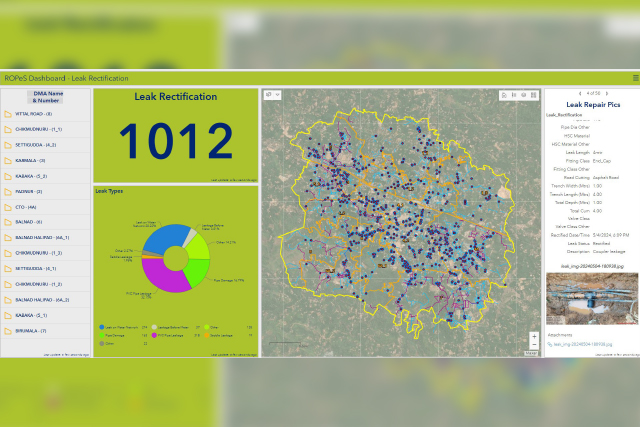
Suez Group has been active in the Indian water and wastewater market since 1978 and established an Indian subsidiary in 1986. Suez uses Esri products to enable comprehensive study and planning through GIS mapping, field surveys, and door-to-door surveys.