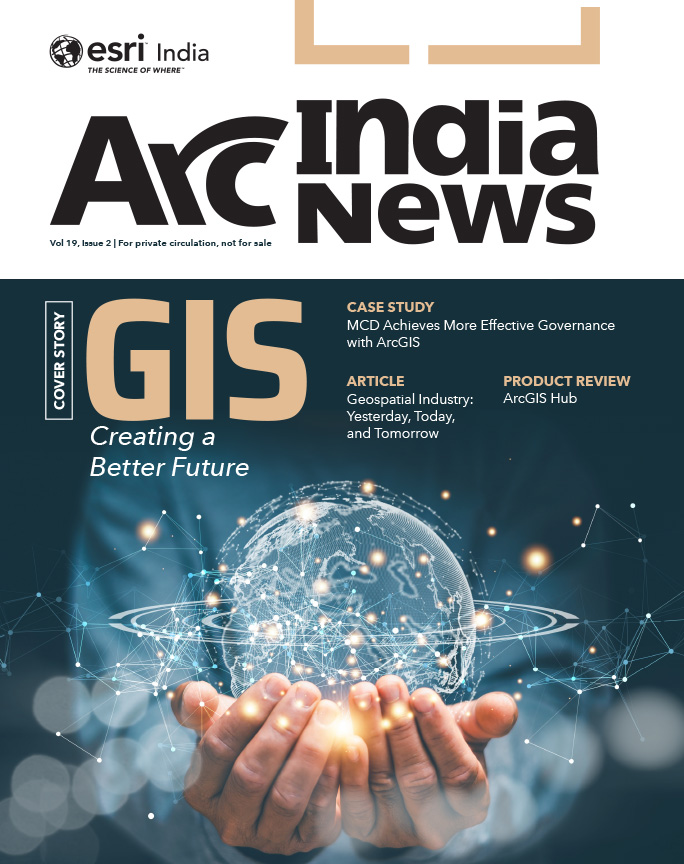
Cover Story
GIS Mapping a Better Future
GIS provides a platform to store, manage, and analyze geospatial data to help make informed decisions in a variety of fields.

Case Study
Table of contents
JNPA undertook a major digital transformation initiative to bring its electric meter infrastructure, land parcel records, lease allotments, and utility assets into a unified Geographic Information System (GIS) platform. Esri India partnered with JNPA to build a scalable geospatial framework that could map, manage, and analyze the port and township infrastructure more effectively. The initiative began with mapping electric meter boxes spread across the port and township areas and expanded to integrate land allotment data, utility networks, and field-based inspection tools—all within the ArcGIS Enterprise ecosystem.
Client
Jawaharlal Nehru Port Authority
Industry
Government
Project
A unified GIS system to map, manage, and analyze the port and township infrastructure.
Organization Profile
The Jawaharlal Nehru Port Authority (JNPA), located at Navi Mumbai, is India’s leading container port and a critical node in the country’s maritime logistics network. Since its inception on May 26, 1989, JNPA has played a pivotal role in handling around 50% of the total containerized cargo across all major Indian ports. With direct connectivity to over 200 ports worldwide, it serves as a gateway for global trade and is ranked 26th among the top 100 container ports in the world. JNPA’s journey from a bulk cargo terminal to a technologically advanced container port is a testament to its commitment to efficiency, innovation, and sustainability.
Website
www.jnport.gov.in
Before adopting GIS, JNPA faced multiple operational challenges:
Esri India proposed and implemented a comprehensive ArcGIS based solution, fully integrated with JNPA’s operational systems:
a. Electric Meter Box Mapping: Using ArcGIS Field Maps, field teams captured the geographic locations and attributes of electric meters across the port and township areas.
b. Centralized Geospatial Database: All spatial and non-spatial data were integrated into a secure ArcGIS Enterprise geodatabase hosted within JNPA’s infrastructure.
 Electric Meter Operations and Maintenance Dashboard
c. Integration with SAP: Allotment records from JNPA’s SAP system were spatially linked to land parcels and buildings, enabling visual validation and real-time data correlation.
d. Web and Mobile Applications: Operational Dashboards and web apps were created using ArcGIS Dashboards and Experience Builder, providing interactive tools for various departments including Estate, Electrical, SEZ and Planning.
e. Real-time Field Inspections: With ArcGIS mobile tools, ground teams can now collect and validate data in the f ield, reducing turnaround time and increasing accuracy.
f. Data Governance and Security: Role-based access ensures that data is secure, validated, and accessible to authorized users only.
The solution created a live, unified geospatial platform enabling JNPA teams to view, analyse, and act on spatial information in real-time.
 SEZ Lease Management Dashboard
 Port Asset Management Dashboard
 Port Operations Dashboard
The deployment of Esri’s GIS solution brought measurable and strategic advantages to JNPA:
a. 30% reduction in site verification time through mobile enabled field inspections.
b. Seamless data correlation between SAP allotment records and spatial land parcels, improving accuracy in lease validation.
c. Up to 40% reduction in manual reporting efforts, due to automated dashboards and digital maps.
d. Improved infrastructure planning and resource allocation using spatial analytics.
 Quarter Allotment
 Daily Berthing Dashboard
e. Significant cost savings by reducing redundant field visits and enabling quicker, data-driven decisions.
f. High data accuracy, reducing inconsistencies in asset records and improving accountability across departments.
g. Better inter-departmental collaboration, as all users now refer to a common geospatial platform.
 Encroachment Detection Dashboard
 Air Quality Dashboard
At JNPA, GIS has become a strategic enabler across all domains—ensuring precise encroachment monitoring, efficient asset and electrical infrastructure management, smart SEZ planning, and real-time environmental tracking. By integrating spatial intelligence into our operations, we’ve enhanced transparency, accelerated decision-making, and set new standards in smart port governance—positioning JNPA as a benchmark for operational excellence and sustainable growth.
Shri Unmesh Sharad Wagh, Deputy Chairperson, JNPA
To download the PDF version of this article, click the button below.
GIS provides a platform to store, manage, and analyze geospatial data to help make informed decisions in a variety of fields.
The MCD GIS citizen portal is a step towards better governance taken by the Municipal Corporation of Delhi to allow the citizens of Delhi to avail various services through an easy-to-use interface along with geo-referential data.

In the heart of Rajasthan, R-CAT (Rajasthan Centre of Advanced Technology) emerges as a beacon of innovation and knowledge. Established by the Government of Rajasthan, it’s not just an institute- it’s a gateway to the future.
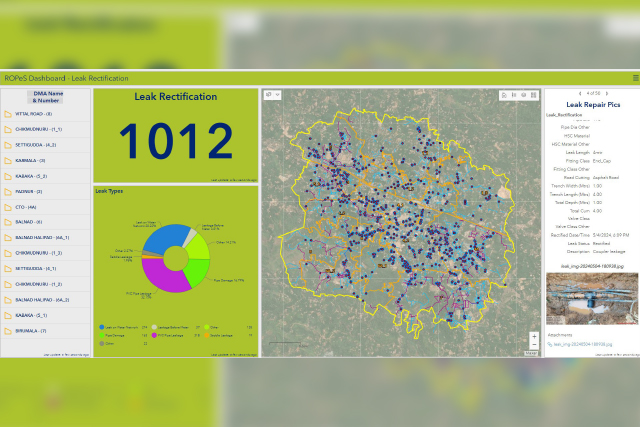
Suez Group has been active in the Indian water and wastewater market since 1978 and established an Indian subsidiary in 1986. Suez uses Esri products to enable comprehensive study and planning through GIS mapping, field surveys, and door-to-door surveys.